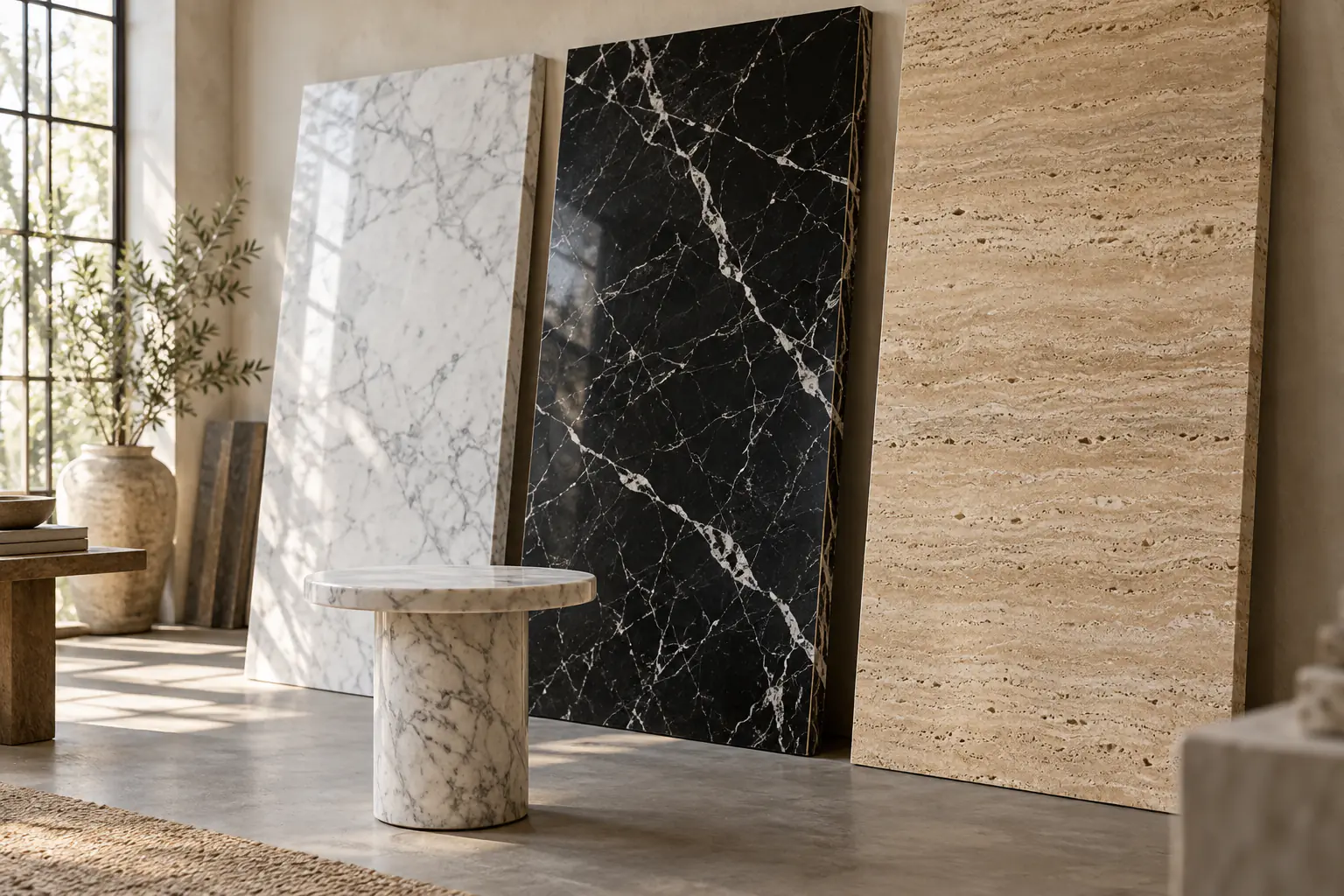
Marble, travertine and onyx are often displayed side by side, and all three are calcium-carbonate stones that respond to the same gentle care. Yet they look, feel and age very differently.
Knowing those differences is the fastest way to choose the right stone for a table, a wall or a bathroom, and to avoid asking a stone to do a job it was never suited for.
At a glance
Marble: crystalline, cool to the touch, with veining that ranges from soft and feathery to bold and graphic. Hardness around 3 to 4 on the Mohs scale; dense with low porosity. Best for tables, consoles, vanities and statement surfaces.
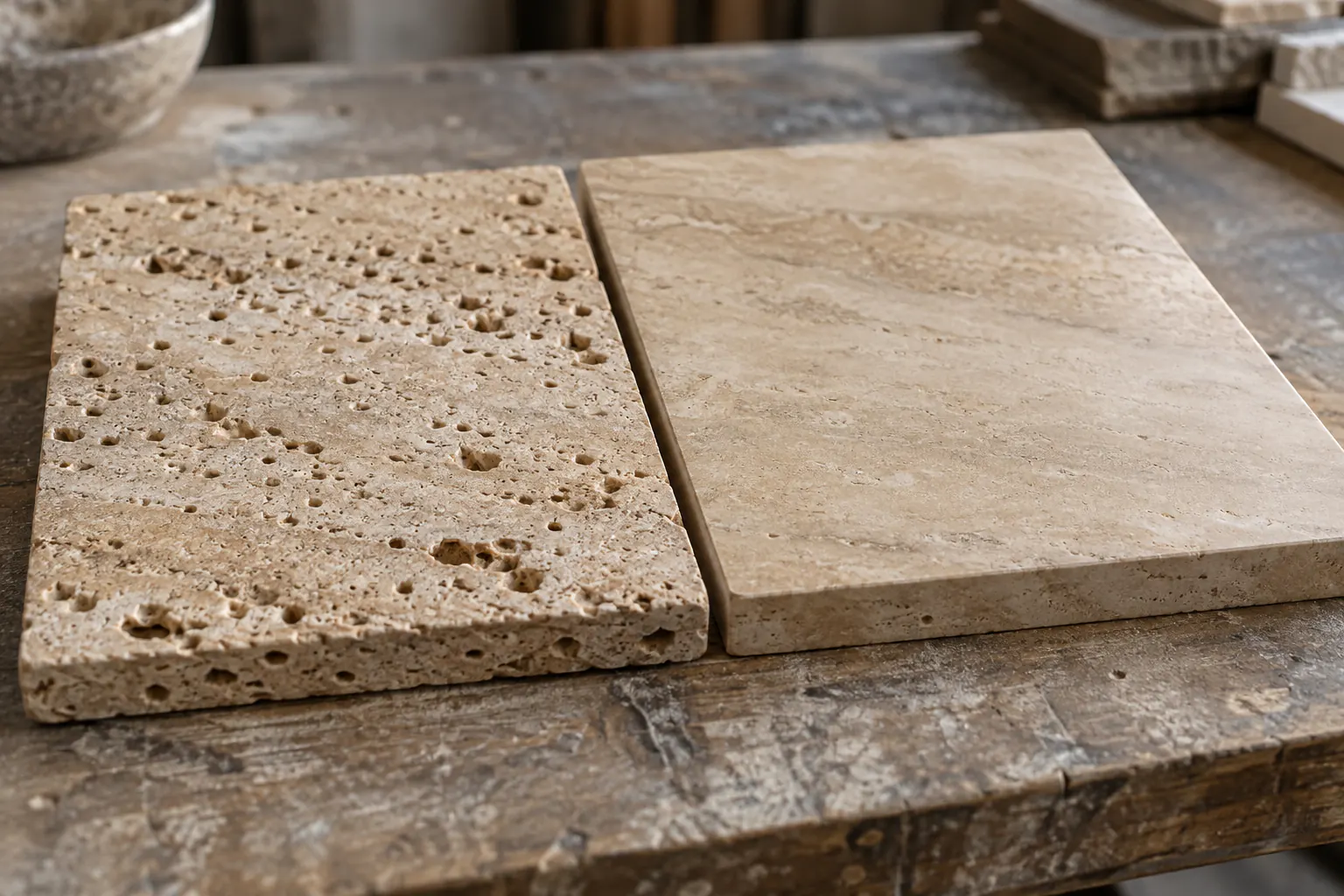
Travertine: warm and earthy, with natural pores and linear banding left by the mineral springs where it formed. Similar hardness to marble but noticeably more porous. Best for coffee and side tables, floors, walls and relaxed Mediterranean interiors.
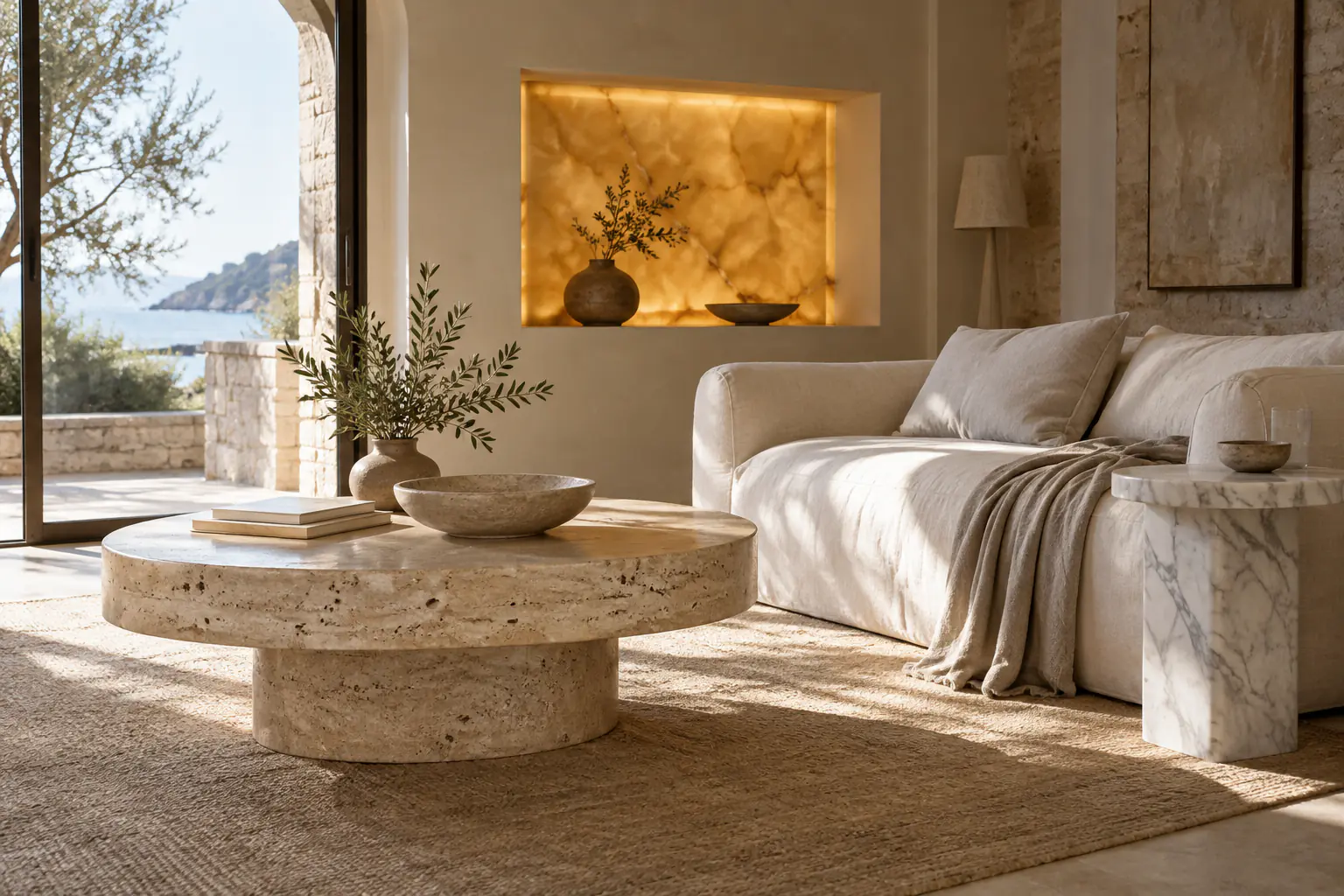
Onyx: translucent, with flowing bands of honey, cream, green or white. The onyx used in interiors is usually a banded calcite stone, softer and more delicate than marble. Best for backlit panels, feature walls, bar fronts, vanities and decorative objects.
Marble: the classic, and the most versatile
Marble forms when limestone is transformed by heat and pressure deep in the earth. The calcite recrystallises, giving marble its luminous depth and its veins, which are traces of other minerals that flowed through the stone.
It is strong under load and takes both honed and polished finishes beautifully, which makes it the most versatile of the three for furniture. Its weaknesses are shared by every calcite stone: acids such as lemon, vinegar and wine leave dull etch marks, and hard objects can scratch the surface.
In our atelier we work with white Carrara and Calacatta, black Nero Marquina, green Verde Alpi and red Rosso Levanto. Lighter marbles in a honed finish are the most forgiving for everyday dining; darker and polished marbles are dramatic but show marks sooner.
Travertine: warmth and texture
Travertine is a sedimentary stone deposited by mineral-rich hot springs. Gas bubbles trapped during formation leave its characteristic pores and channels, and the slow layering creates soft linear banding.
Those pores are the main decision. Unfilled travertine keeps them open for a raw, tactile surface that suits rustic and outdoor settings but collects dust and liquids. Filled travertine has the pores packed with a matching filler and is honed flat, giving a smooth, easy-to-clean surface for tables and indoor floors.
Because travertine is more porous than marble, it should be sealed and resealed when water starts to darken the surface. In beige and silver tones it brings a calm, sun-warmed feel that pairs naturally with linen, oak and plaster.
Onyx: light as a material
Onyx in architecture and furniture is usually a banded calcite stone formed slowly from dripping or flowing mineral water, which is why it shows layered, almost liquid bands of colour.
Its defining quality is translucency. Lit from behind, cream and honey areas glow while darker bands stay deep, turning a wall, bar front or lamp into a source of soft light. The effect depends on the stone's colour and thickness, so backlit projects are always planned with the specific slab.
Onyx is softer and more fragile than marble and it reacts to acids, so it is rarely the right choice for a busy dining or kitchen surface. It shines in places where it is admired more than used: feature walls, vanities, side tables and lighting.
Care is similar for all three
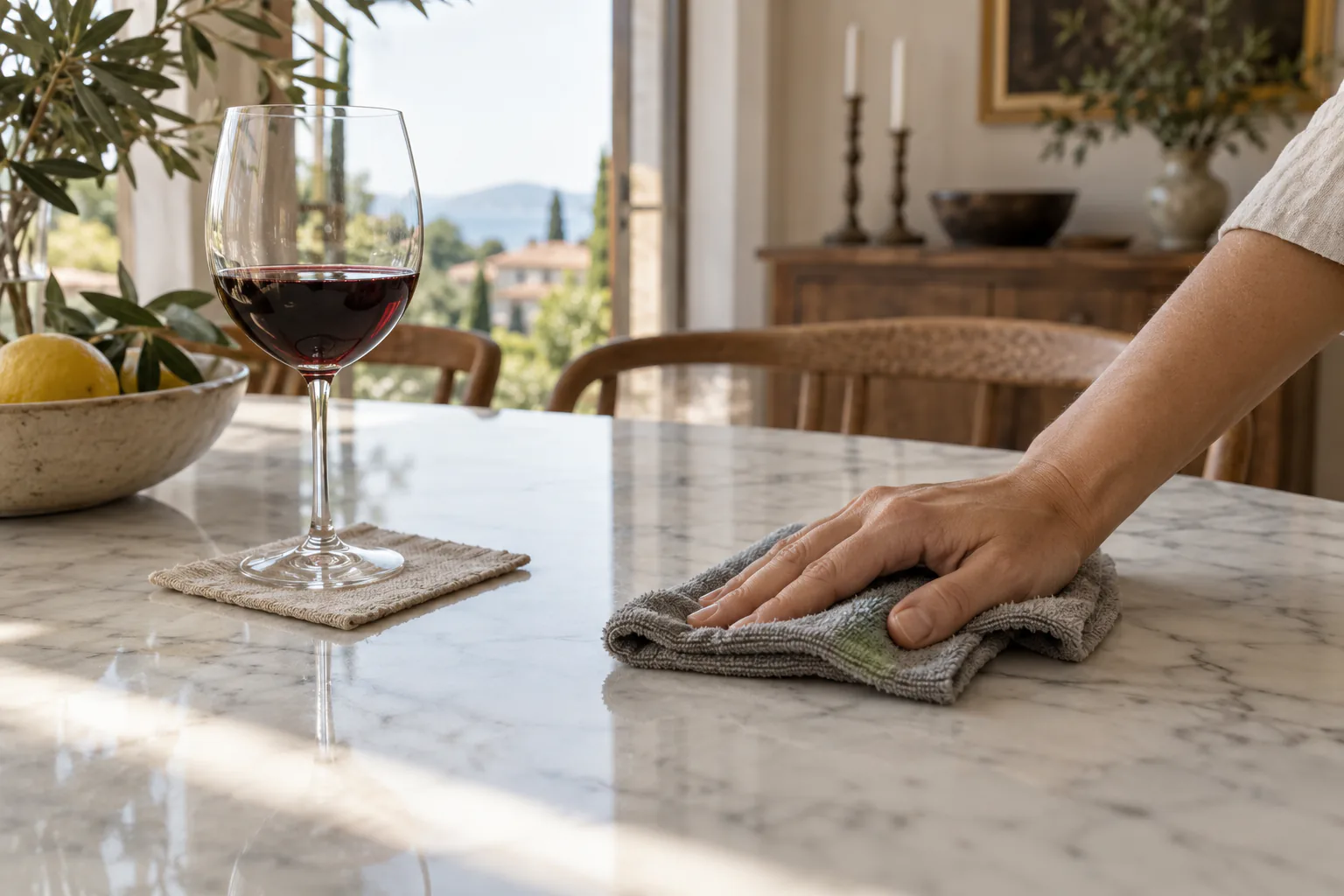
All three stones share the same rules: clean with a soft cloth and a pH-neutral stone cleaner, blot spills quickly, avoid acidic and abrasive products, and use coasters and placemats on tables. Seal porous surfaces such as travertine and honed marble, and test them periodically with a few drops of water.
The difference is in tolerance. Marble forgives a little more in daily use, travertine needs more attention to sealing, and onyx asks to be treated like a fine object.
Which stone for which piece?
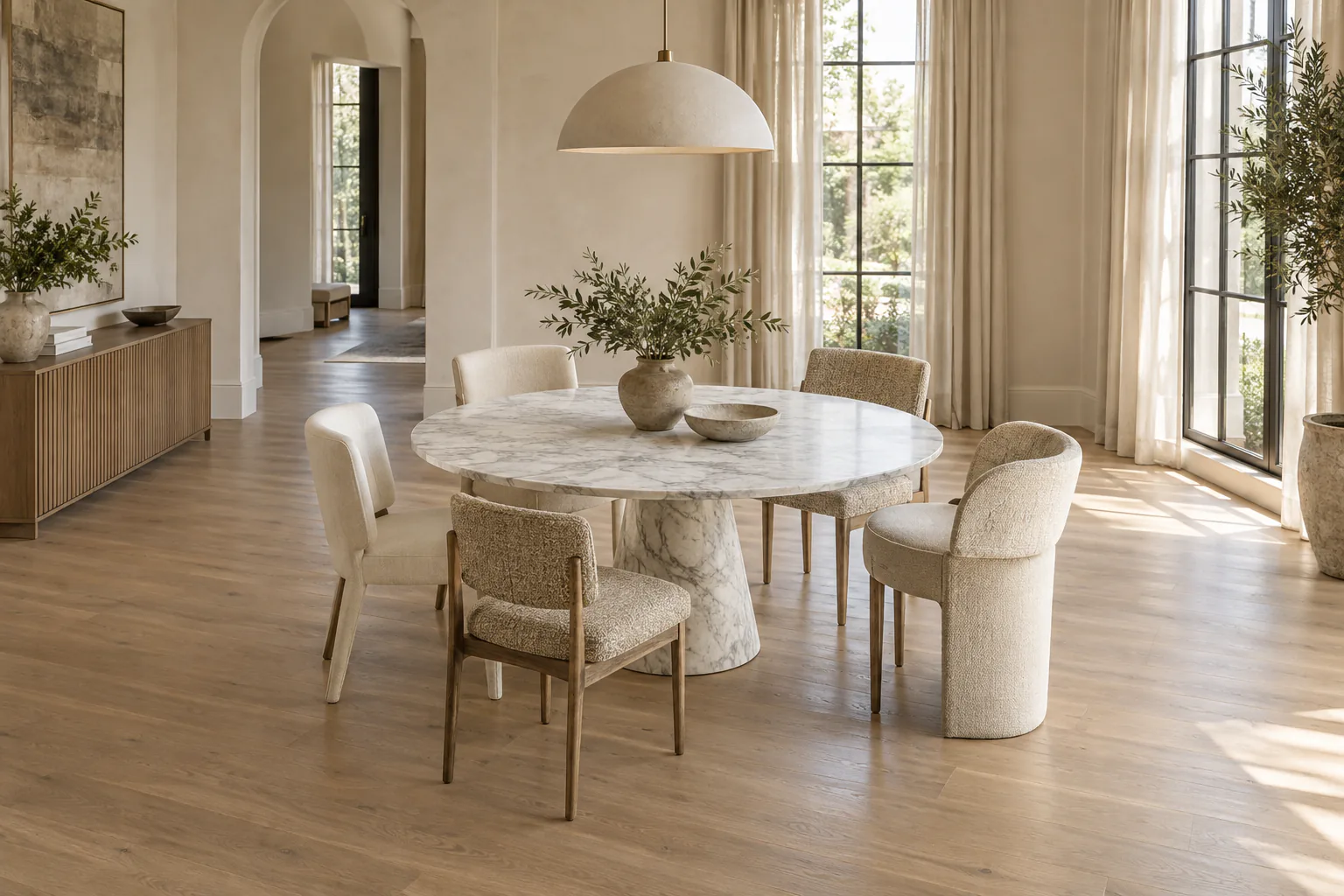
- Dining table: honed marble in a light or veined stone; filled and honed travertine for a warmer, matte look.
- Coffee and side tables: travertine for texture and warmth, marble for contrast and polish, onyx for a decorative accent.
- Consoles and entrance pieces: any of the three; this is the place for bold veining or a rare colour.
- Bathrooms: marble or filled travertine with a honed finish for grip; onyx for a vanity or backlit wall rather than a shower floor.
- Lighting and feature walls: onyx when you want the stone to glow, marble when you want sculptural form.
Questions we hear most
Is travertine a type of marble?
No. Both are calcium-carbonate stones and are often sold together, but travertine is a sedimentary stone formed by mineral springs, while marble is a metamorphic stone recrystallised by heat and pressure.
Which is more durable, marble or travertine?
Their hardness is similar, but marble is denser and less porous, so it resists staining better. Filled, honed and sealed travertine performs well indoors with regular care.
Can onyx be used for a dining table?
It can, but it is not the most practical choice. Onyx is softer than marble and sensitive to acids and scratches, so it suits side tables, consoles and decorative surfaces better than daily dining.
Do all three need sealing?
Travertine and honed marble benefit most from sealing. Polished marble and onyx are less absorbent, but a water test tells you when any surface has become open enough to reseal.
Rozaik atelier
Not sure which stone suits your project?
Tell us where the piece will live and how it will be used, and we will suggest the stones and finishes that fit.
Ask about materials for your project