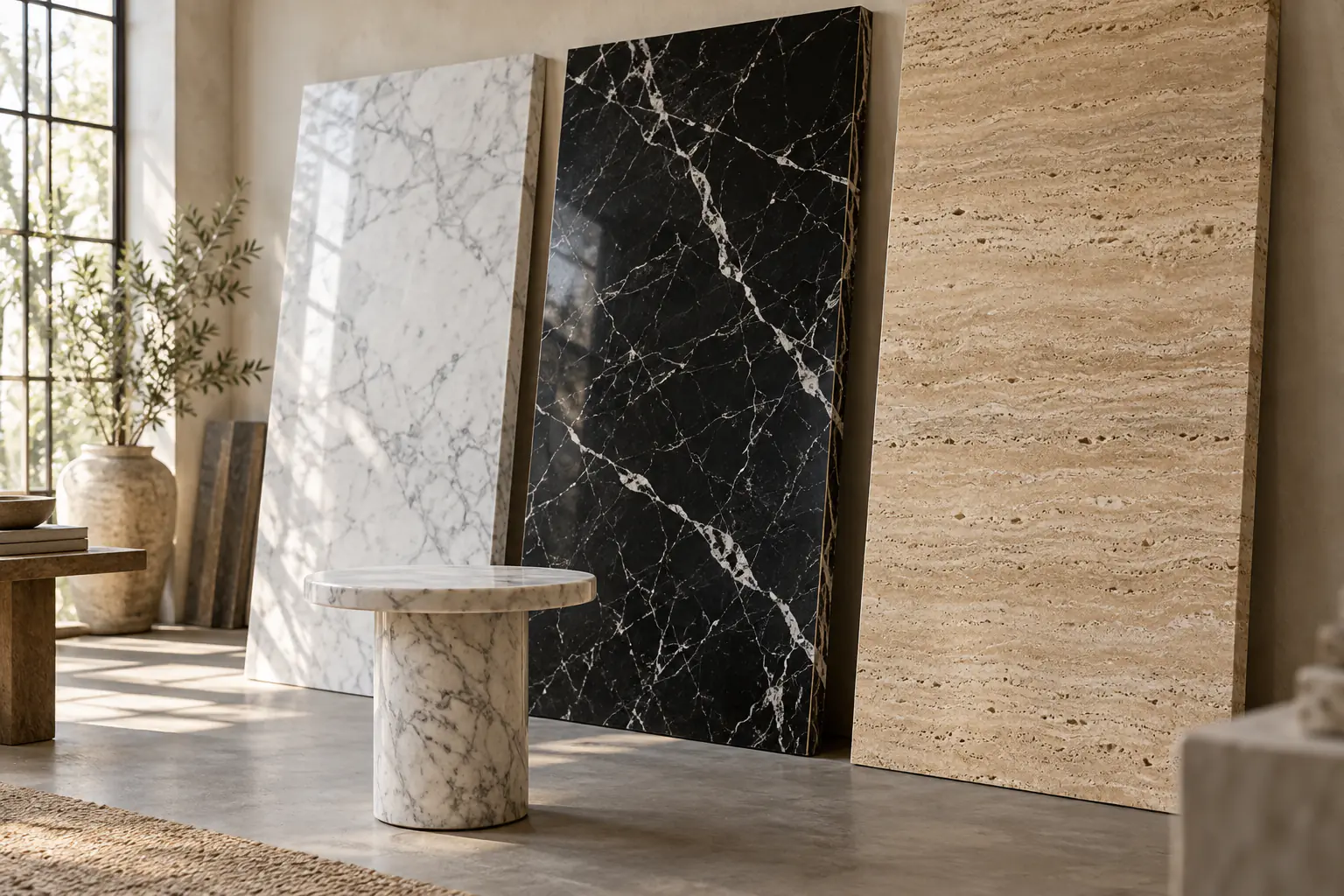
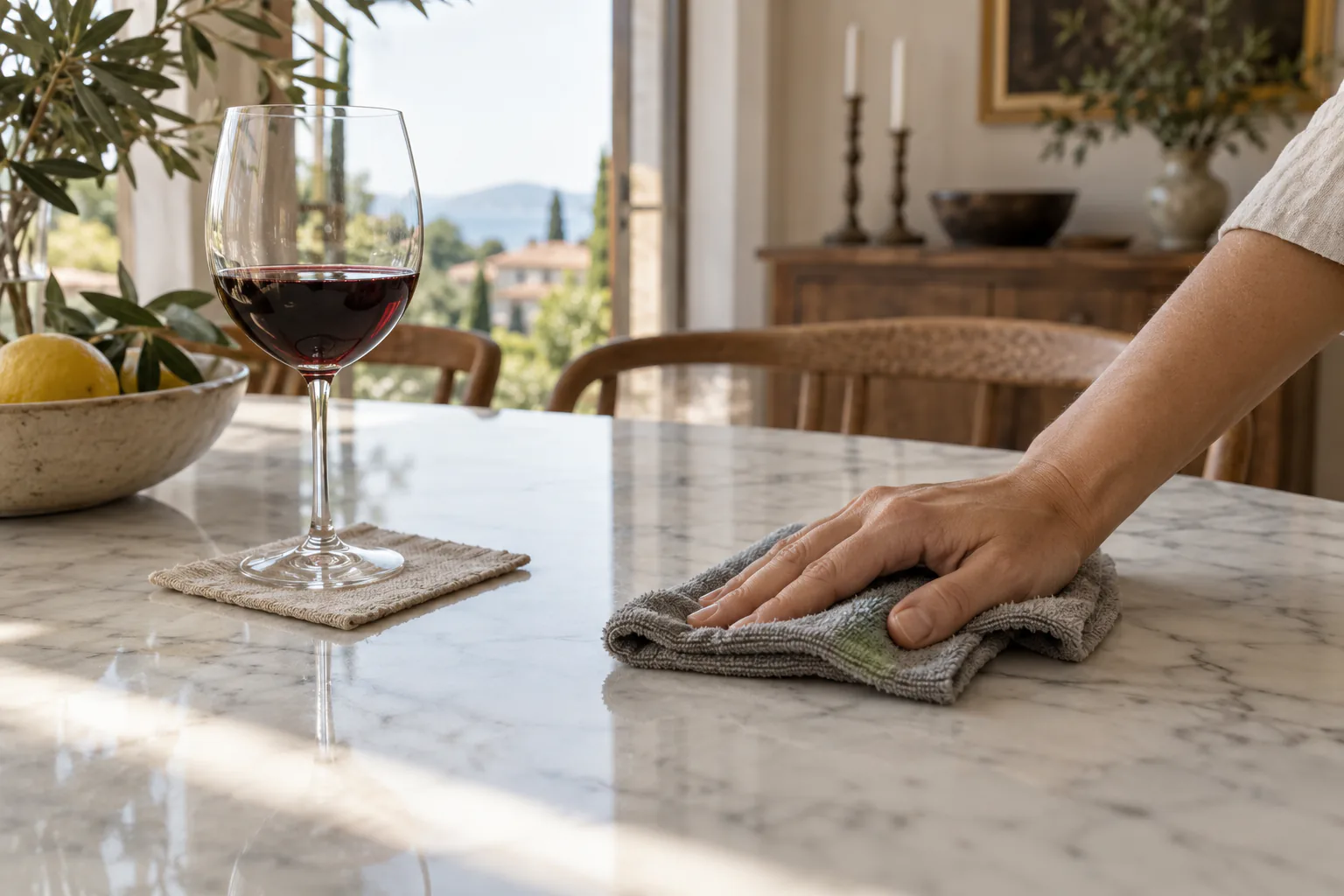
Marble rewards a little attention with a lifetime of beauty. The stone itself is strong; what needs care is its surface, which is softer than granite and reacts to acids.
This guide covers the daily routine, the two kinds of marks you may meet (stains and etches), how to treat each one, and how to keep the stone sealed.
The everyday routine
- Dust and wipe with a soft microfiber cloth. Grit dragged across the surface is the most common cause of fine scratches.
- For cleaning, use lukewarm water or a mild pH-neutral cleaner made for natural stone, then dry with a clean soft cloth.
- Use coasters under glasses, placemats under plates and trivets under hot dishes.
- Lift decorative objects instead of sliding them, and add felt pads under vases and lamps.
- Blot spills promptly with a paper towel. Do not rub: rubbing spreads the liquid and pushes it into the stone.
Stain or etch? Know the difference
A stain is something that has soaked into the stone: oil, coffee, wine or ink sitting in the pores. It usually appears darker than the surrounding marble.
An etch is a change to the surface itself. Acids such as lemon juice, vinegar, wine, tomato and some soft drinks dissolve a microscopic layer of calcite and leave a dull, lighter or rough-feeling spot. Nothing has gone into the stone, so cleaning cannot remove it.
A quick way to tell them apart: run a fingertip over the mark. If it feels slightly rough or dull compared with the surrounding surface, it is an etch. If it feels smooth and simply looks darker, it is a stain. An oily, acidic spill such as salad dressing can do both at once.
How to lift a stain with a poultice
A poultice is a paste that draws a stain out of the stone as it dries. The liquid in the paste dissolves the stain and the powder absorbs it. Choose the liquid by the type of stain.
Poultice step by step
- Identify the stain. Oil and grease call for a solvent such as acetone or mineral spirits. Organic stains such as coffee, tea and wine on light marble respond to 12% hydrogen peroxide with a few drops of ammonia.
- Test in a hidden spot first. Peroxide can lighten dark stones, and solvents need ventilation and gloves.
- Mix the liquid with an absorbent powder such as diatomaceous earth, kaolin clay or plain white flour to the consistency of thick peanut butter.
- Spread it about 6 mm thick, extending slightly beyond the stain, then cover with plastic wrap and tape the edges.
- Leave it for 24 to 48 hours so it dries slowly, then remove the wrap and let it dry completely.
- Scrape it off with a plastic or wooden spatula, rinse with clean water and dry. If the stain has lightened, repeat until it is gone.
What to do about etch marks
Because an etch is surface damage, it has to be polished or honed away rather than cleaned. Very light dull spots on polished marble can often be revived with a marble polishing powder made for the purpose. Deeper etches, and any etch on a honed surface, are best left to a stone restorer: a DIY polish on honed marble can leave a shiny patch that looks worse than the original mark.
Remember that on a honed finish, light etching is barely visible, which is one reason we often recommend honed marble for dining tables.
Sealing: what it does and when to do it
A penetrating (impregnating) sealer fills the microscopic pores just below the surface so that liquids soak in more slowly. It buys you time to wipe up a spill and greatly reduces staining. It does not stop acids from etching the surface, and it does not change the look of the stone.
There is no single calendar for resealing: dense polished marble may stay protected for a long time, while honed marble and travertine need it more often. Let the stone tell you.
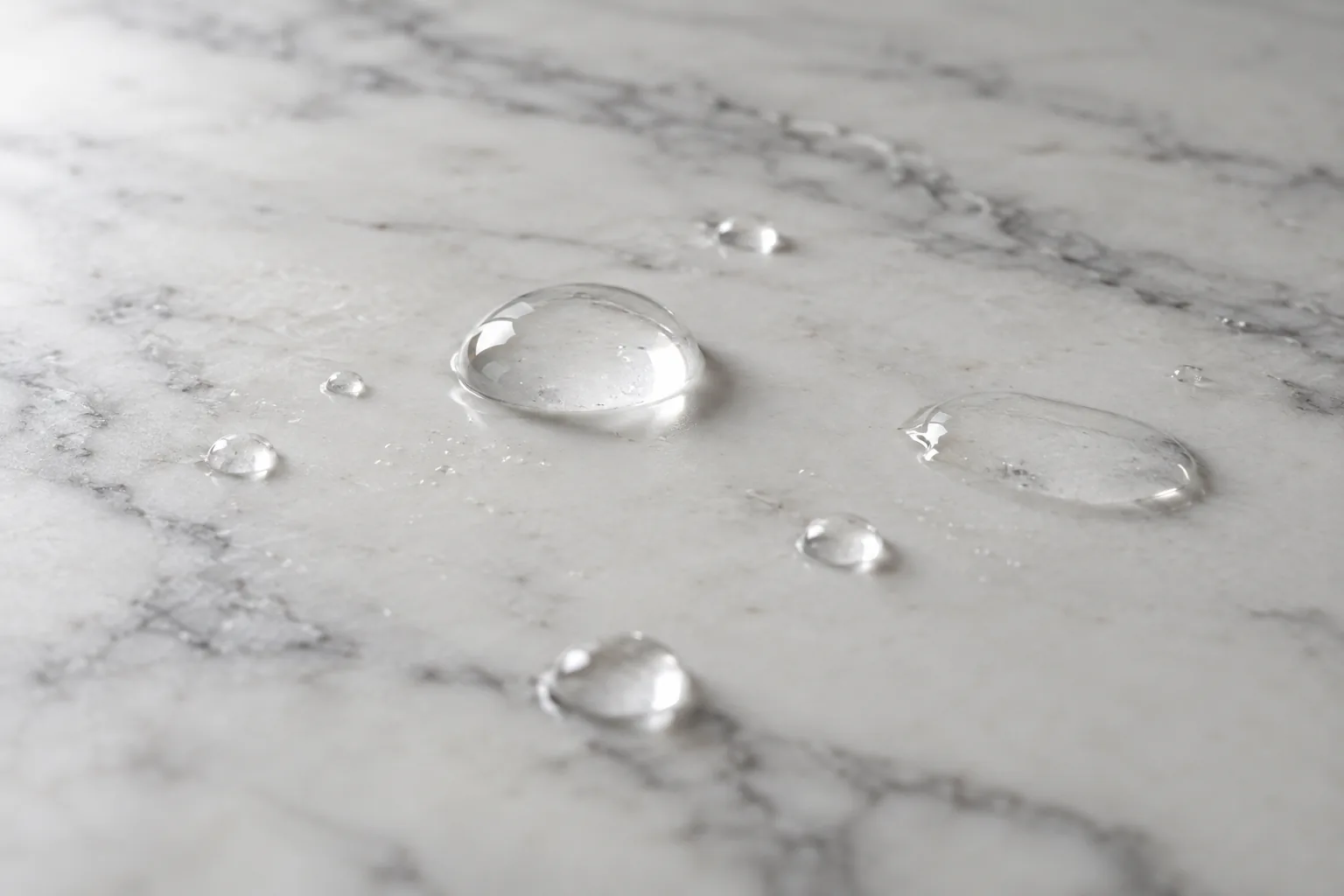
The water test
- Pour a few drops of water on a few spots of the surface, including areas that see the most use.
- Leave them for 10 to 15 minutes without wiping.
- If the water still beads and the stone has not darkened, the sealer is working.
- If the stone darkens under the drops, it is absorbing and it is time to reseal. The faster it darkens, the more overdue it is.
Mosaic and travertine pieces
Mosaic artworks and panels should be dusted with a soft cloth or a vacuum with a soft brush attachment, and cleaned lightly with a damp cloth and neutral soap. Avoid pressure washing, solvents and metal tools that can damage tesserae or grout, and check grout lines from time to time in wet areas.
Travertine follows the same rules as marble, with more attention to sealing because it is more porous. On unfilled travertine, use a soft brush to clear dust from the open pores.
Questions we hear most
Can I use dish soap on marble?
A few drops of mild, pH-neutral dish soap in warm water is fine for occasional cleaning. Rinse and dry afterwards, because soap left on the surface can build a dull film.
How often should marble be sealed?
Use the water test rather than a fixed schedule. Dining and kitchen surfaces often need resealing every 6 to 12 months, while vanities and decorative pieces can go much longer.
Will sealing stop etch marks?
No. Sealing slows absorption and prevents most stains, but acids react with the surface itself. Coasters, quick wiping and a honed finish are the best defence against etching.
Is a white ring from a glass a stain?
A dull white or light ring is usually an etch from an acidic drink, not a stain. A dark ring is more likely water or a liquid absorbed into the stone.
Rozaik atelier
Planning a new marble piece?
We will help you choose a stone and finish that suit the way you live, so it stays beautiful with the least effort.
Start a custom request